The Legacy of
Paul Stanley
& Company
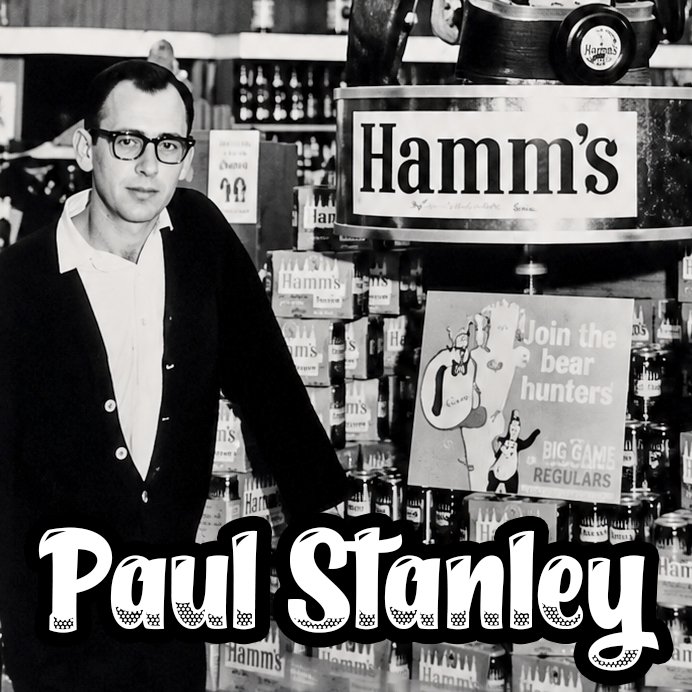
Founded by Paul Stanley in the late 1940s at 180 First Street in San Francisco, California, Paul Stanley & Company revolutionized point-of-purchase advertising with some of the most imaginative and mechanically innovative displays ever created. Operating under the slogan “Merchandising in Motion,” the company became renowned for designing large-scale animated floor displays that transformed ordinary retail spaces into unforgettable customer experiences.
While Paul Stanley created displays for companies such as Coca-Cola, Pepsi, and Mother’s Cookies, his greatest success came through partnerships with regional breweries. These animated displays combined eye-catching movement, whimsical characters, lighting, and ingenious mechanical engineering to attract shoppers and strengthen brand recognition. At a time when television advertising was still evolving, these remarkable creations served as powerful marketing tools inside grocery stores, liquor stores, and retail establishments across the country.
Designed to Captivate
Each display was individually designed to reflect the identity of its client while incorporating Paul Stanley’s distinctive blend of creativity, craftsmanship, and mechanical simplicity. Although every project featured its own unique theme, many shared similar engineering concepts and construction techniques that became hallmarks of the company’s work.
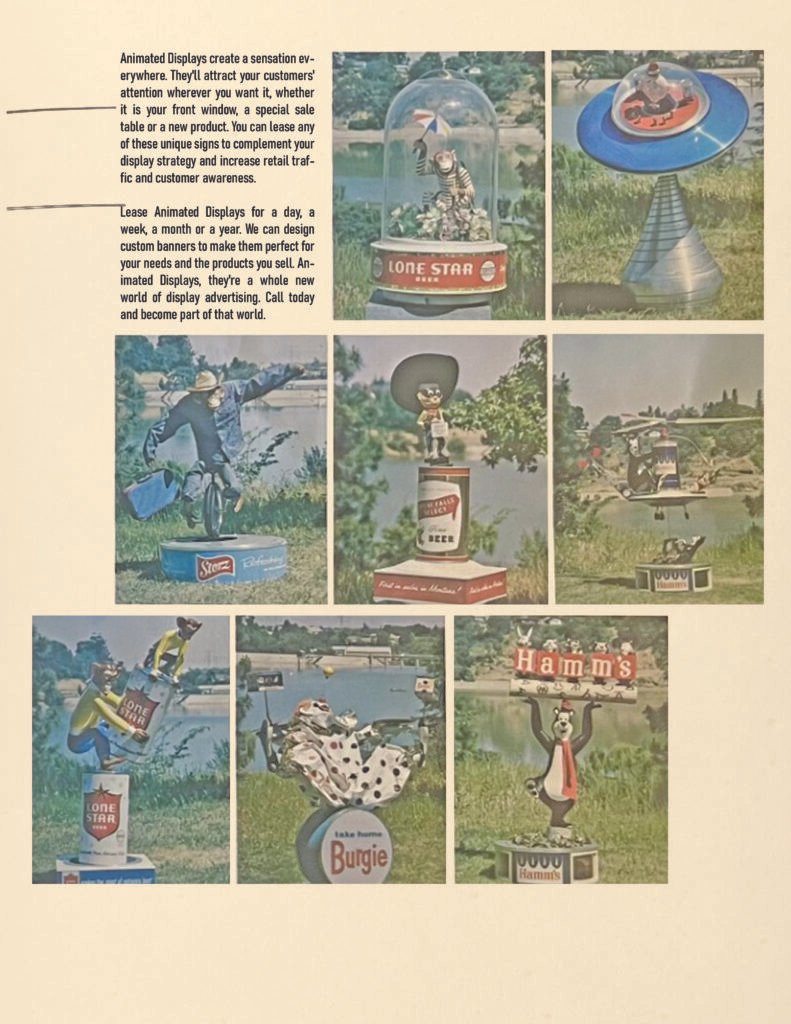
From the late 1940s through the late 1960s, Paul Stanley & Company produced a wide variety of animated displays for numerous businesses. Their largest and most recognizable clients included regional breweries such as Hamm’s, Lone Star, Burgermeister, and Storz. Smaller breweries also commissioned displays, including Great Falls Select Beer, whose “First in Sales in Montana” campaign is believed to have been produced in extremely limited numbers—possibly as few as ten units.
Handcrafted Works of Art
Every Paul Stanley display was built entirely by hand. Because they were individually assembled, no two examples are exactly alike. Minor differences in colors, bases, figures, or mechanical components are common and often resulted from ongoing design refinements or the availability of materials during production. Rather than striving for absolute uniformity, Paul Stanley embraced these subtle variations, knowing that each display would typically be installed individually in stores and rotated throughout a sales territory.
Production numbers were remarkably small. Depending on the campaign, as few as 10 and rarely more than 40 displays were produced for a particular design. Today, these limited production numbers make surviving examples exceptionally rare and highly sought after by collectors of breweriana and advertising memorabilia.
The Hamm’s Displays
Among Paul Stanley’s many clients, Hamm’s Brewery became his largest account during the 1960s. The company commissioned four major animated display designs, one of which was produced in two distinct variations.
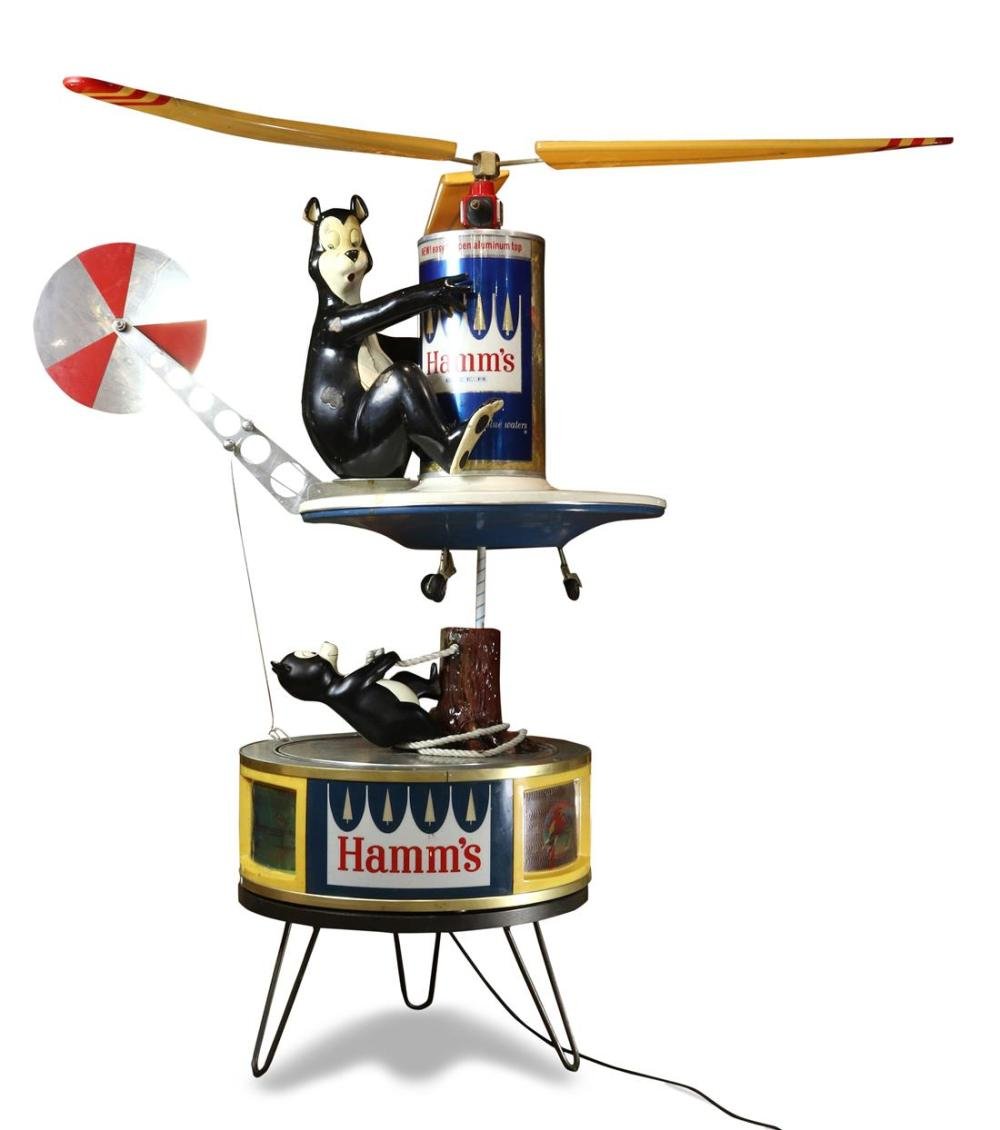
Perhaps the most spectacular of them all is the Hamm’s Helicopter Display. Standing approximately 6½ feet tall with an operating diameter of nearly nine feet, the display slowly rotates from an illuminated base featuring scenes from the legendary Land of Sky Blue Waters. Above, the helicopter spins independently while both the main rotor and tail rotor turn continuously, creating one of the most elaborate and visually striking point-of-purchase displays ever produced.
Other memorable Hamm’s displays included the Bear Can Spinner, Bear Motorcycle, and the popular Bear on Log, offered in both Eastern (Northwoods) and Western versions. Each combined animation, storytelling, and mechanical ingenuity in ways that captivated shoppers and reinforced the Hamm’s brand.
Built to Travel
These displays represented a significant investment for the companies that commissioned them. To maximize their value, they were carefully transported from store to store on rotating promotional schedules using custom-built wooden shipping crates designed specifically for each display.
Many displays eventually returned to Paul Stanley’s headquarters in San Francisco, while others remained in storage at regional distribution centers. Original shipping crates are exceptionally rare today and offer an important glimpse into how these remarkable advertising pieces were transported and preserved.
Our collection includes two Paul Stanley displays that still retain their original shipping crates: the Lone Star Monkeys, housed in two custom crates (including a separate crate for the base), and what is believed to be one of the rarest Paul Stanley beer displays ever produced—The Cowboy, created for Great Falls Select Beer and its memorable slogan, “First in Sales in Montana.”
An Enduring Legacy
Paul Stanley & Company ceased operations in the late 1960s, and Paul Stanley himself passed away during the 1980s. Yet his influence on commercial advertising continues to endure.
Blending artistry, engineering, humor, and mechanical innovation, Paul Stanley’s animated displays remain among the finest point-of-purchase advertising pieces ever created. Built to withstand years of constant transportation and public display, they have survived as extraordinary examples of American design and craftsmanship. Today, these animated masterpieces continue to delight collectors, historians, and museum visitors, preserving the legacy of one of the most creative figures in advertising history.
The Legacy of
Paul Stanley
& Company
Founded by Paul Stanley in the late 1940s at 180 First Street in San Francisco, California, Paul Stanley & Company revolutionized point-of-purchase advertising with some of the most imaginative and mechanically innovative displays ever created. Operating under the slogan “Merchandising in Motion,” the company became renowned for designing large-scale animated floor displays that transformed ordinary retail spaces into unforgettable customer experiences.
While Paul Stanley created displays for companies such as Coca-Cola, Pepsi, and Mother’s Cookies, his greatest success came through partnerships with regional breweries. These animated displays combined eye-catching movement, whimsical characters, lighting, and ingenious mechanical engineering to attract shoppers and strengthen brand recognition. At a time when television advertising was still evolving, these remarkable creations served as powerful marketing tools inside grocery stores, liquor stores, and retail establishments across the country.
Designed to Captivate
Each display was individually designed to reflect the identity of its client while incorporating Paul Stanley’s distinctive blend of creativity, craftsmanship, and mechanical simplicity. Although every project featured its own unique theme, many shared similar engineering concepts and construction techniques that became hallmarks of the company’s work.
From the late 1940s through the late 1960s, Paul Stanley & Company produced a wide variety of animated displays for numerous businesses. Their largest and most recognizable clients included regional breweries such as Hamm’s, Lone Star, Burgermeister, and Storz. Smaller breweries also commissioned displays, including Great Falls Select Beer, whose “First in Sales in Montana” campaign is believed to have been produced in extremely limited numbers—possibly as few as ten units.
Handcrafted Works of Art
Every Paul Stanley display was built entirely by hand. Because they were individually assembled, no two examples are exactly alike. Minor differences in colors, bases, figures, or mechanical components are common and often resulted from ongoing design refinements or the availability of materials during production. Rather than striving for absolute uniformity, Paul Stanley embraced these subtle variations, knowing that each display would typically be installed individually in stores and rotated throughout a sales territory.
Production numbers were remarkably small. Depending on the campaign, as few as 10 and rarely more than 40 displays were produced for a particular design. Today, these limited production numbers make surviving examples exceptionally rare and highly sought after by collectors of breweriana and advertising memorabilia.
The Hamm’s Displays
Among Paul Stanley’s many clients, Hamm’s Brewery became his largest account during the 1960s. The company commissioned four major animated display designs, one of which was produced in two distinct variations.
Perhaps the most spectacular of them all is the Hamm’s Helicopter Display. Standing approximately 6½ feet tall with an operating diameter of nearly nine feet, the display slowly rotates from an illuminated base featuring scenes from the legendary Land of Sky Blue Waters. Above, the helicopter spins independently while both the main rotor and tail rotor turn continuously, creating one of the most elaborate and visually striking point-of-purchase displays ever produced.
Other memorable Hamm’s displays included the Bear Can Spinner, Bear Motorcycle, and the popular Bear on Log, offered in both Eastern (Northwoods) and Western versions. Each combined animation, storytelling, and mechanical ingenuity in ways that captivated shoppers and reinforced the Hamm’s brand.
Built to Travel
These displays represented a significant investment for the companies that commissioned them. To maximize their value, they were carefully transported from store to store on rotating promotional schedules using custom-built wooden shipping crates designed specifically for each display.
Many displays eventually returned to Paul Stanley’s headquarters in San Francisco, while others remained in storage at regional distribution centers. Original shipping crates are exceptionally rare today and offer an important glimpse into how these remarkable advertising pieces were transported and preserved.
Our collection includes two Paul Stanley displays that still retain their original shipping crates: the Lone Star Monkeys, housed in two custom crates (including a separate crate for the base), and what is believed to be one of the rarest Paul Stanley beer displays ever produced—The Cowboy, created for Great Falls Select Beer and its memorable slogan, “First in Sales in Montana.”
An Enduring Legacy
Paul Stanley & Company ceased operations in the late 1960s, and Paul Stanley himself passed away during the 1980s. Yet his influence on commercial advertising continues to endure.
Blending artistry, engineering, humor, and mechanical innovation, Paul Stanley’s animated displays remain among the finest point-of-purchase advertising pieces ever created. Built to withstand years of constant transportation and public display, they have survived as extraordinary examples of American design and craftsmanship. Today, these animated masterpieces continue to delight collectors, historians, and museum visitors, preserving the legacy of one of the most creative figures in advertising history.